ADA Title II Rule: Making Government Websites Accessible & ADA-Compliant

The recently finalized ADA Title II rule establishes a clear and enforceable technical standard for the digital presence of state and local government entities. This update to the Americans with Disabilities Act of 1990 ensures that public services, programs, and activities are accessible to every citizen, regardless of their physical or cognitive abilities. Government website accessibility is no longer a vague recommendation but a specific legal requirement that must meet the Web Content Accessibility Guidelines (WCAG) 2.1 Level AA. This shift reflects the increasing reliance on digital platforms for essential services such as voter registration, public health updates, and local tax payments. By codifying these standards, the Department of Justice aims to eliminate the digital barriers that have historically excluded millions of individuals from participating fully in civic life.
Public entities must now prioritize these updates to remain in accordance with federal law and avoid potential litigation. Navigating these requirements involves a comprehensive review of existing web content, mobile applications, and third-party integrations. As the digital landscape continues to evolve, maintaining high standards for inclusivity is a fundamental responsibility of every public office.
Understanding Compliance Deadlines and Requirements
The ADA Title II rule includes a structured implementation timeline that accounts for the varying resources of different public entities. Originally, the Department of Justice set aggressive compliance targets based on the jurisdiction's population size. However, a recent extension of compliance dates provides state and local governments with additional time to align their complex web infrastructures with the new standards.
Larger municipalities generally face earlier deadlines than smaller rural districts, which often lack specialized IT departments. According to Jackson Lewis, these extensions are a direct response to the technical challenges involved in auditing and remediating vast amounts of legacy data and public records. While the deadlines have shifted, the underlying requirement to provide a nondiscriminatory experience remains a top priority for federal oversight.
Public entities should utilize this additional time to conduct thorough audits of their mobile apps and web portals. Waiting until the final months to begin remediation often leads to higher costs and incomplete implementation. Strategic planning ensures that the transition to a more accessible digital environment is both smooth and legally sound.
Implementing Technical Standards for ADA-Compliance
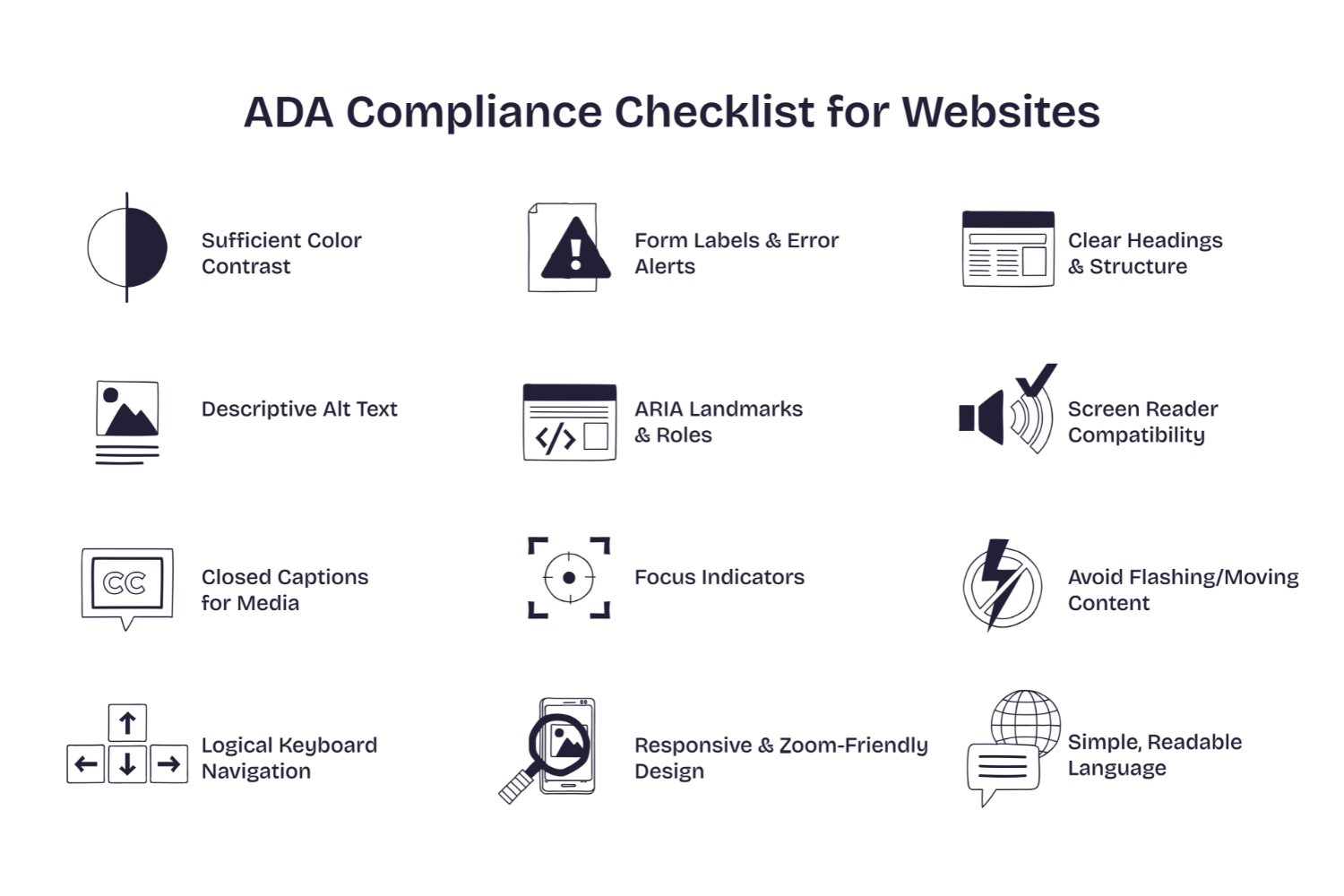
Achieving a high level of ADA-compliance requires a technical approach that addresses the diverse ways people interact with the internet. The Department of Justice identifies WCAG 2.1 Level AA as the benchmark for these efforts, which includes specific requirements for text alternatives, keyboard navigation, and color contrast. For example, official ADA guidance emphasizes that videos must include captions for deaf or hard-of-hearing viewers, while images require descriptive alt text for screen reader users. This technical rigor ensures that the digital content remains perceivable, operable, understandable, and robust for everyone.
Many public entities find that these updates actually improve the overall user experience for the general public by creating a cleaner and more logical site structure. Implementing these changes involves more than just a surface-level redesign. It requires a deep dive into the underlying code to ensure compatibility with various assistive technologies. Regular testing with both automated tools and human reviewers is the best way to verify that a site remains accessible as new content is added. Following these established guidelines helps mitigate the risk of legal challenges while expanding the reach of public information to a broader audience.
Best Practices for Government Website Accessibility
Maintaining government website accessibility is an ongoing process that extends beyond a one-time audit or technical fix. Public entities should establish internal policies that prioritize inclusivity in every new digital project, from PDF documents to interactive maps. Training staff members on the basics of accessible content creation helps prevent the introduction of new barriers during daily updates. According to the U.S. Chamber of Commerce, businesses and government agencies alike benefit from a “design for all” philosophy that simplifies navigation and improves readability. This proactive stance reduces the burden of remediation and ensures that the digital presence grows more inclusive over time.
Furthermore, public offices should provide a clear way for users to report accessibility issues or request alternative formats. This feedback loop allows the entity to address specific barriers quickly and demonstrates a good-faith effort to comply with the Americans with Disabilities Act of 1990. Transparent communication about accessibility goals also builds trust within the community. As digital services become the primary way citizens interact with their local government, the importance of maintaining an open and accessible web portal cannot be overstated. Consistent monitoring and updates are the hallmarks of a successful digital strategy.
Navigating the ADA Title II Rule With Rizzo Young Marketing
Adapting to the complexities of the ADA Title II rule requires a partner like Rizzo Young Marketing, who understands the intersection of digital marketing and federal regulation. They provide the expertise to audit, remediate, and maintain websites to meet the highest accessibility standards.
Their focus is on creating digital experiences that are not only legally compliant but also highly functional for every user, using a holistic approach that ensures every element of a site supports total inclusivity, protects reputations, and serves the entire community effectively. To discuss how these new regulations affect your current digital strategy, schedule an intro call with Rizzo Young Marketing.